Dynamics GP
Explore the legacy of Microsoft Dynamics GP and discover how transitioning to cloud-based solutions like Dynamics 365 Business Central and Dynamics 365 Finance can future-proof your business management.
From Great Plains to Dynamics GP to Dynamics 365: A Comprehensive ERP Solution
Microsoft Dynamics GP, originally known as Great Plains, has been a vital ERP solution for businesses for several decades. Starting as an on-premise application, it has evolved to meet the changing needs of organizations, becoming a reliable and adaptable business management solution.
History Highlights
-
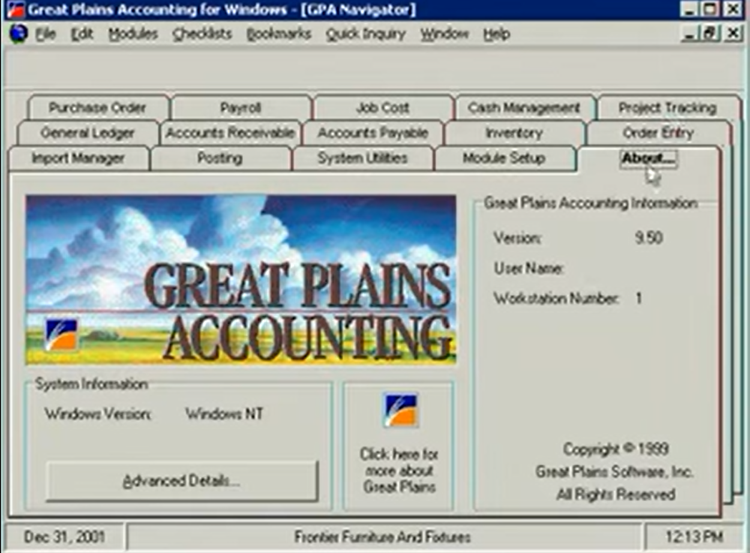
Great Plains (1980s-2001)
Initially developed as a comprehensive on-premise ERP solution aimed at small and medium-sized businesses (SMBs).
-
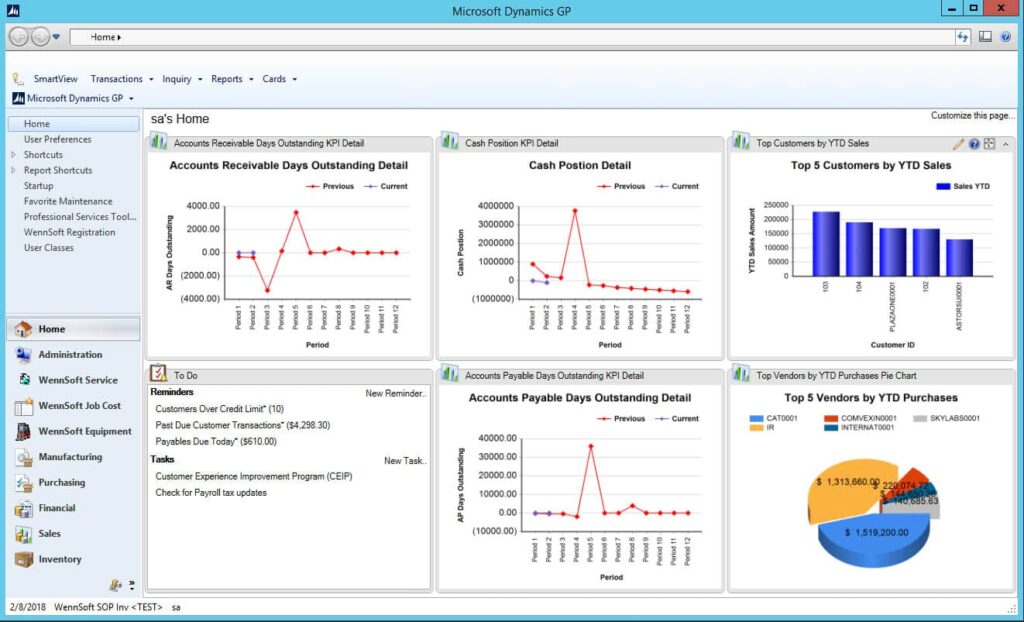
Microsoft Acquisition (2001)
Rebranded as Microsoft Dynamics GP, continuing its legacy as a versatile on-premise application.
-
Licensing Evolution
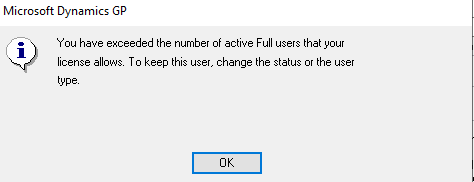
- Traditional Licensing Model: Enabled businesses to purchase the software outright, giving them perpetual access whilst maintaining a Business Ready Enhancement Plan (BREP)
- Subscription Model: Introduced to offer lower upfront costs and flexibility, making it easier for businesses to manage expenses.
-
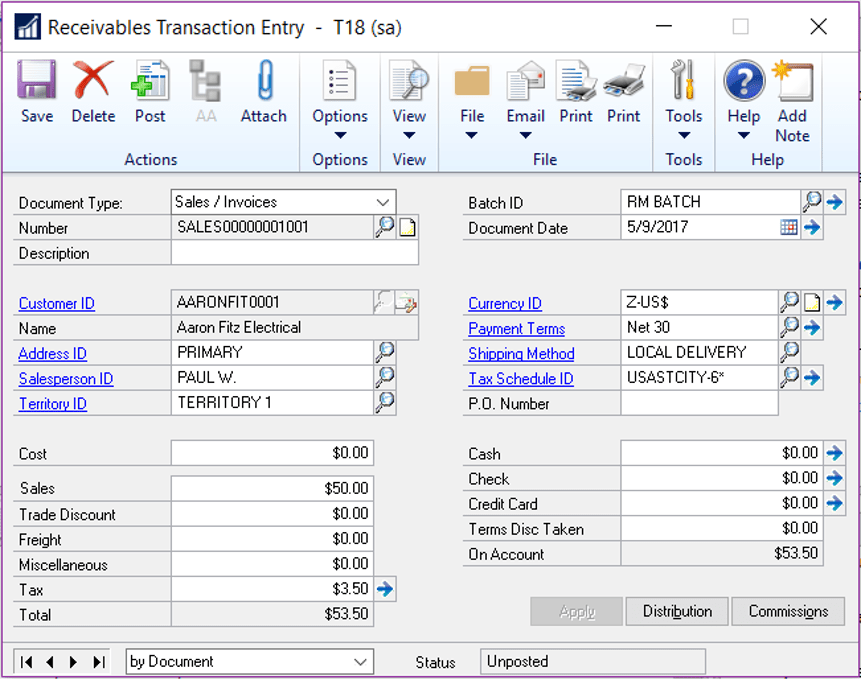
Current Dynamics GP (2001-Present)
Continues as an on-premise ERP solution, with options for integration with other Microsoft services, providing a comprehensive toolset for business management.
-
Current Focus
Today, Microsoft Dynamics GP remains a trusted on-premise ERP solution, particularly for businesses looking for a stable and reliable system to manage financials, inventory, and operations. It integrates with other Microsoft products, offering flexibility and extensive functionality to suit various business needs.
Future for Dynamics GP Customers
As the business landscape evolves, many Dynamics GP customers are exploring opportunities to transition to cloud-based solutions that offer greater flexibility and scalability. Dynamics 365 Business Central and Dynamics 365 Finance represent the future for many Dynamics GP users:
Dynamics 365 Business Central: This is the recommended path for small to medium-sized businesses currently using Dynamics GP. Business Central provides a comprehensive, cloud-based ERP solution with enhanced functionality and seamless integration with other Microsoft cloud services. It supports businesses in managing their finances, supply chain, sales, and operations all in one platform while offering the flexibility of cloud access.
Dynamics 365 Finance: Designed for larger organizations with more complex financial and operational needs, Dynamics 365 Finance offers advanced financial management capabilities, real-time insights, and robust analytics. It integrates with Dynamics 365 Supply Chain Management, allowing for a fully integrated suite of applications to manage all aspects of a business in the cloud.
Core Great Plains and Dynamics GP Capabilities
Financial management
General ledger, accounts payable and receivable, cash management, budgeting and fixed assets.
Distribution and inventory
Purchasing, sales order processing, stock control and warehouse visibility.
Reporting
Financial and operational reporting using Dynamics GP tools and connected Microsoft technologies.
Payroll and human resources
Employee, payroll and compliance processes where the relevant modules and local solutions are deployed.
Integration
Connections to Microsoft 365, Power BI and other business applications through supported integration approaches.
Great Plains Software Cost and Support Considerations
There is no single Great Plains software cost that applies to every organisation. Total cost depends on the licences already owned, the number and type of users, the Dynamics GP version, annual support or enhancement arrangements, infrastructure, hosting, integrations, customisations and partner services. Organisations should also budget for backups, security, database maintenance, testing and periodic upgrades.
Before investing further in an existing environment, it is important to assess the version in use, Microsoft’s applicable lifecycle policy, third-party products and the availability of specialist support. 4Sight can help review the current system, identify operational risk and compare the cost of maintaining Dynamics GP with a phased move to a modern cloud ERP.
Moving from Great Plains to Dynamics 365 Business Central
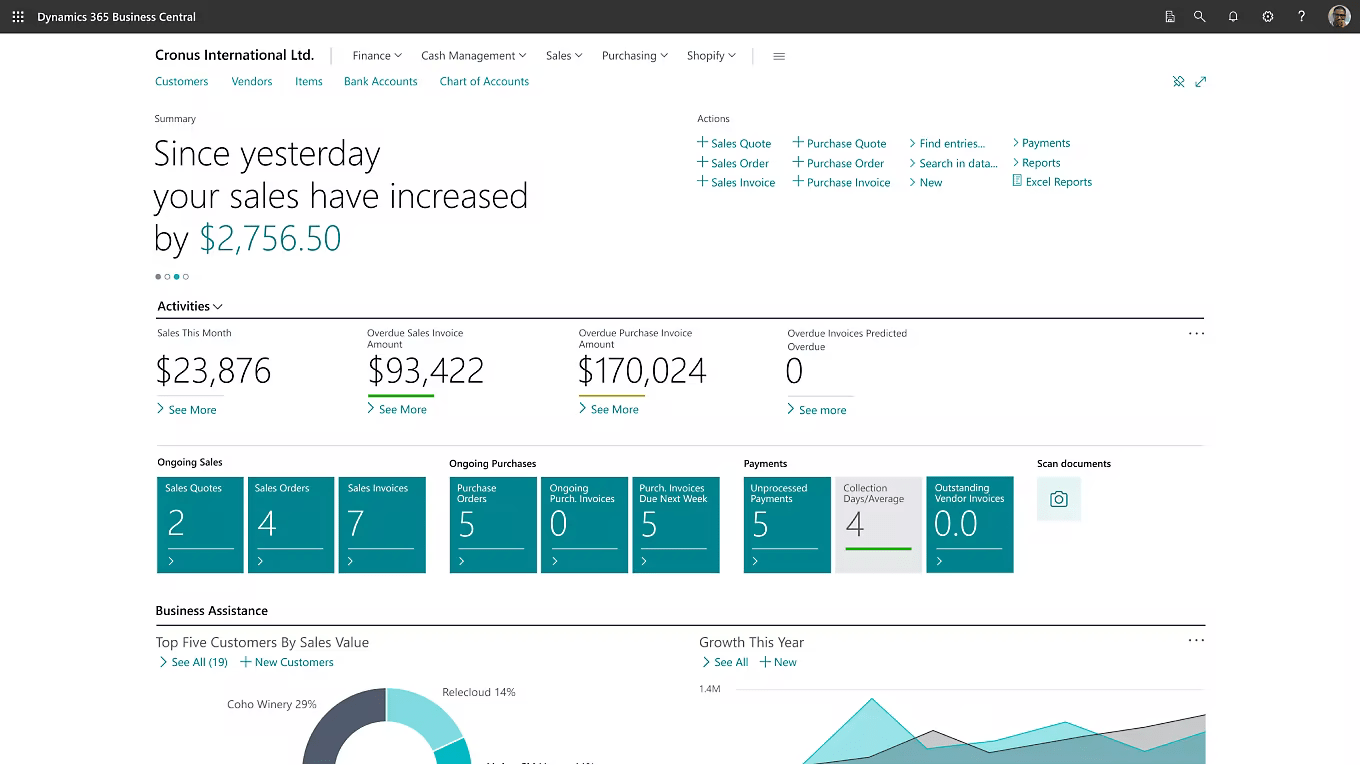
For many small and mid-sized businesses, Microsoft Dynamics 365 Business Central is the natural cloud migration path from Dynamics GP. It brings finance, sales, purchasing, inventory, projects, service and operations into a connected platform with Microsoft 365 integration and cloud-based access.
A typical migration includes discovery, solution design, data cleansing, chart-of-accounts mapping, configuration, integration planning, test migrations, user acceptance testing, training and a controlled cutover. Historical data does not always need to be moved in full; organisations can decide what must be available in Business Central and what should remain accessible through an archive or reporting solution.
Businesses with more complex global, financial or operational requirements may also evaluate Dynamics 365 Finance. 4Sight can help compare the options and build a practical roadmap that protects essential data and processes while reducing migration risk.
Dynamics GP vs Dynamics 365 Business Central
Important Update: End of Perpetual Licensing Model for New Customers
Starting April 2025, new customers will no longer be able to procure Dynamics GP via the perpetual business model. This change encourages businesses to consider transitioning to cloud-based solutions such as Dynamics 365 Business Central or Dynamics 365 Finance, which provide more modern capabilities and ongoing support.
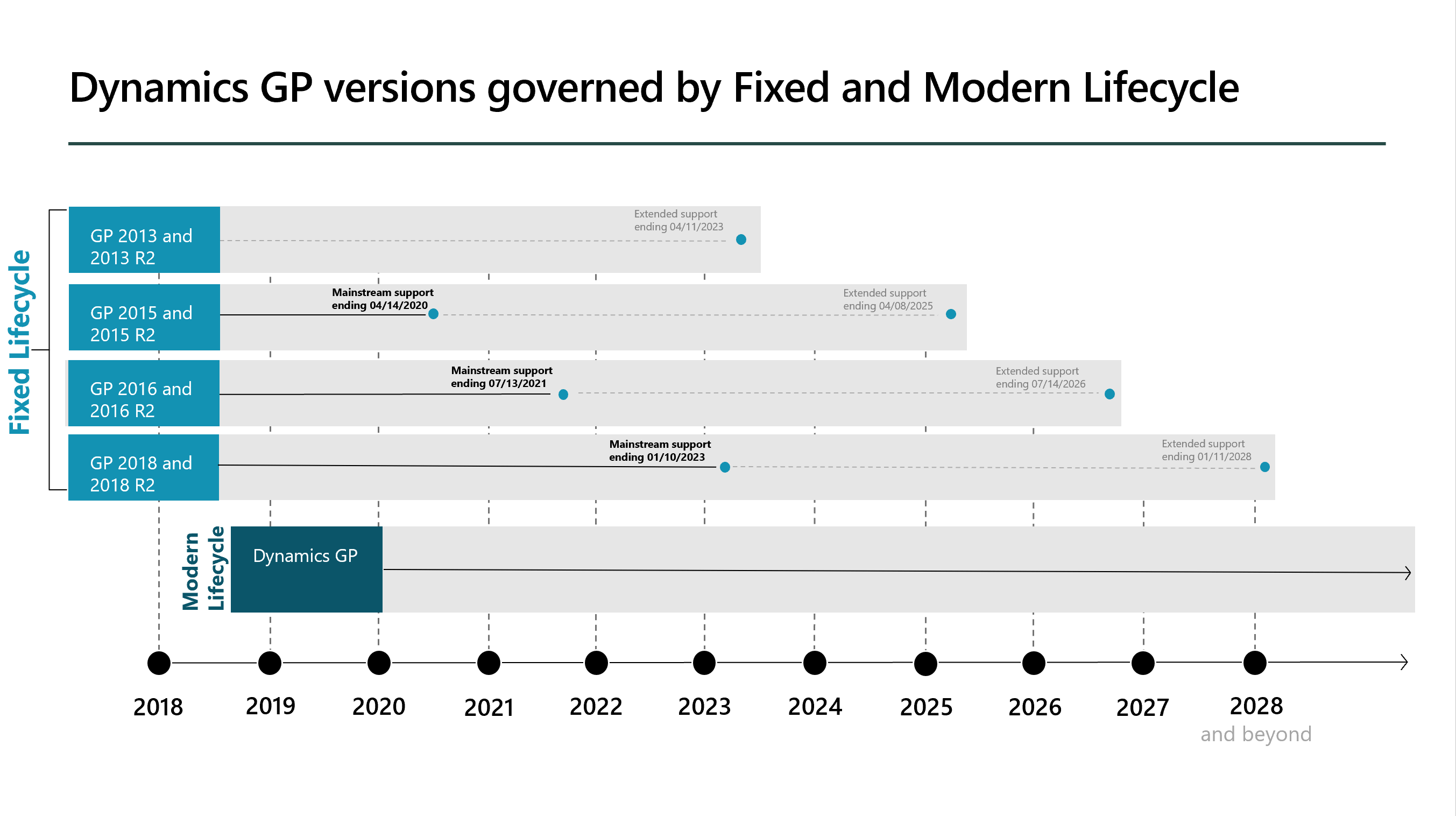
Dynamics GP Modern Lifecycle
Microsoft Dynamics GP is under the Modern Lifecycle Policy, which ensures regular updates and support for customers. This policy covers service packs, hotfixes, and new features, allowing businesses to stay current with the latest improvements. The Modern Lifecycle also provides more flexibility by delivering continuous updates and support, ensuring that customers are always on the latest version without needing significant upgrades.
Transitioning to Dynamics 365
For Dynamics GP customers considering a move to the cloud, Microsoft offers several transition options and promotions, such as the Bridge to Cloud program, to facilitate a smooth migration to Dynamics 365 Business Central or Dynamics 365 Finance. This not only provides access to the latest technology and updates but also ensures continued support and investment protection.
Frequently Asked Questions
Microsoft Dynamics GP is an Enterprise Resource Planning (ERP) solution initially known as Great Plains. It is designed to help small to medium-sized businesses manage their financials, inventory, and operations.
GP stands for Great Plains, the original name of the software before Microsoft acquired it and rebranded it as Dynamics GP.
Microsoft continues to support Dynamics GP, although its focus has shifted towards cloud-based solutions like Dynamics 365 Business Central. Existing customers will still receive support as per Microsoft’s lifecycle policy.
No, Dynamics GP is not free. It is a licensed product that businesses must purchase. There are options for traditional licensing as well as subscription-based models.
Dynamics GP has a user-friendly interface, especially for those familiar with Microsoft products. However, like any ERP system, there is a learning curve depending on the user’s background and experience with ERP solutions.
Dynamics GP is primarily an on-premise ERP solution focused on financials and operations for SMBs. In contrast, Dynamics 365 is a cloud-based suite of business applications, offering a broader range of services and integrations across various business functions.
Great Plains software is the former name of Microsoft Dynamics GP, a long-established enterprise resource planning system used by small and mid-sized organisations. Microsoft acquired Great Plains Software in 2001, and the product later became part of the Microsoft Dynamics family. Many businesses still refer to it as Great Plains, Microsoft Great Plains, Great Plains Accounting or GP software.
Dynamics GP is primarily an on-premises ERP solution built around Microsoft SQL Server. It helps organisations manage financials, purchasing, sales, inventory, fixed assets, payroll and operational reporting. Its durability, familiar Microsoft environment and broad partner ecosystem have made it an important system for many established businesses.
Yes. Great Plains was acquired by Microsoft and evolved into Microsoft Dynamics GP. The names Great Plains, Microsoft Great Plains and Dynamics GP are often used to describe the same product lineage.
Dynamics GP is fundamentally an on-premises product, although it can be hosted by a service provider or on cloud infrastructure. This is different from a cloud-native, software-as-a-service application such as Business Central.
No, Microsoft Dynamics GP is not a database; it is an ERP system that utilizes a database to store its data. The database, typically SQL Server, handles the data management tasks, while GP provides the user interface and business logic.
Microsoft Dynamics GP is widely used by small to medium-sized businesses across various industries, including manufacturing, retail, finance, and professional services, for its robust financial and operational management capabilities.
Dynamics GP offers robust financial management, strong inventory and supply chain capabilities, extensive reporting and analytics tools, and seamless integration with other Microsoft products, making it a versatile choice for SMBs.
While there is no direct replacement for Dynamics GP, Microsoft is encouraging customers to consider transitioning to Dynamics 365 Business Central for a cloud-based ERP solution with modern capabilities and support.
Dynamics GP itself is not a cloud-native application. However, it can be hosted on virtual machines in the cloud to offer some level of cloud accessibility, although it does not offer the full capabilities of a SaaS solution like Dynamics 365.
Dynamics 365 is not being replaced. It is an actively developed suite of business applications, including Business Central, Sales, Customer Service, and more, designed to provide cloud-based solutions for various business needs.
Remaining on Dynamics GP may be appropriate when the system is stable, supported and closely aligned with business processes. Migration becomes more compelling when an organisation needs browser and mobile access, simpler infrastructure, easier updates, improved integration, stronger real-time reporting or a platform that can scale across locations and legal entities.
The best decision should be based on business requirements rather than product age alone. A structured assessment considers process fit, customisations, integrations, data quality, reporting requirements, security, change readiness and the total cost of ownership.
Yes. Customers can migrate suitable master data, opening balances, open transactions and selected history, depending on the source version, data quality and project scope. A discovery and test-migration process determines the safest approach.